A family of instruments shaped to the scale, weather, and social life of each garden.
Scale and setting
One idea, many forms.
Gardens are carefully tended places that grow and change over long periods. The instruments are conceived in the same spirit: their scale, material, sound, and position develop through the conditions of a particular site.
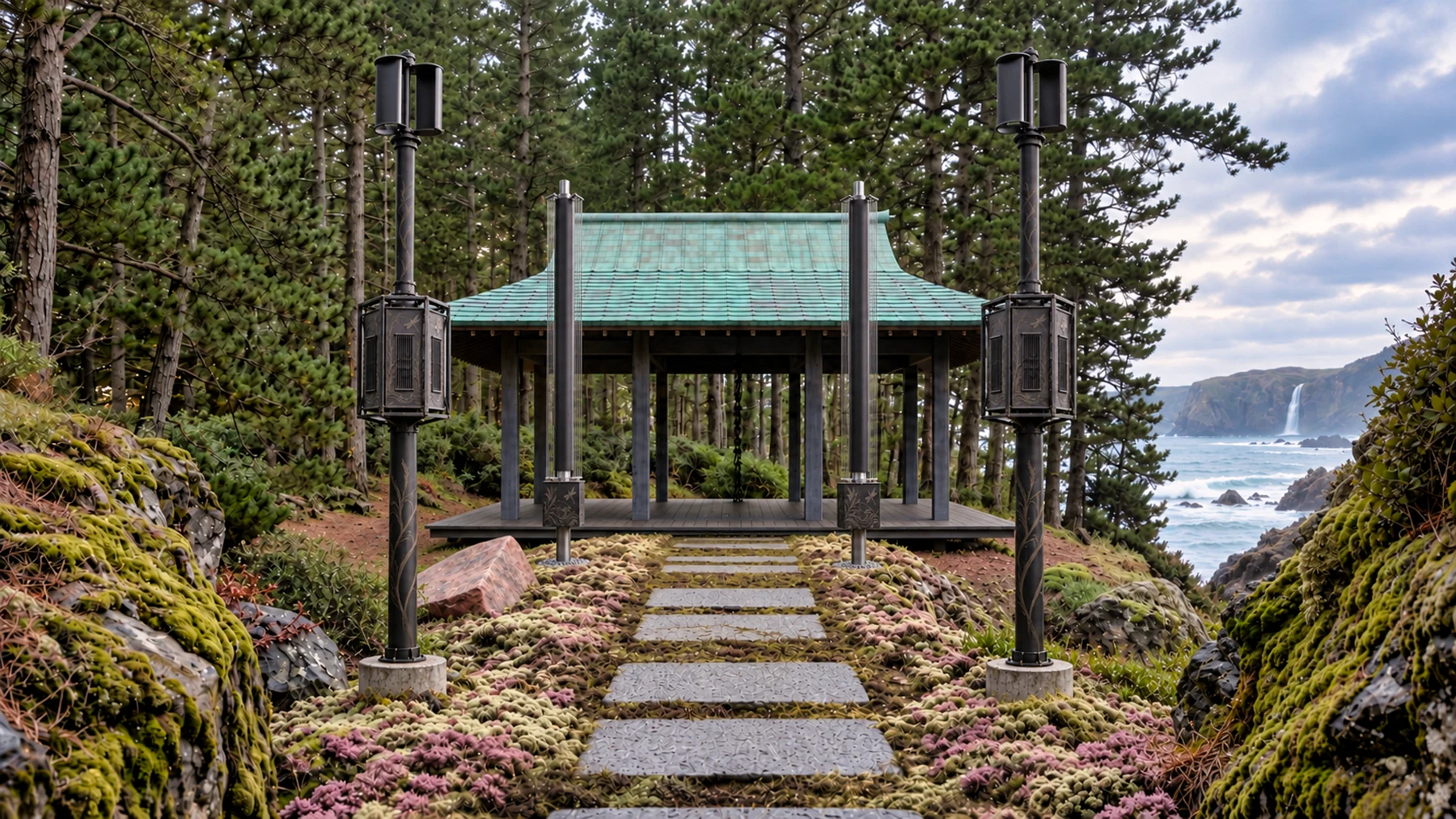
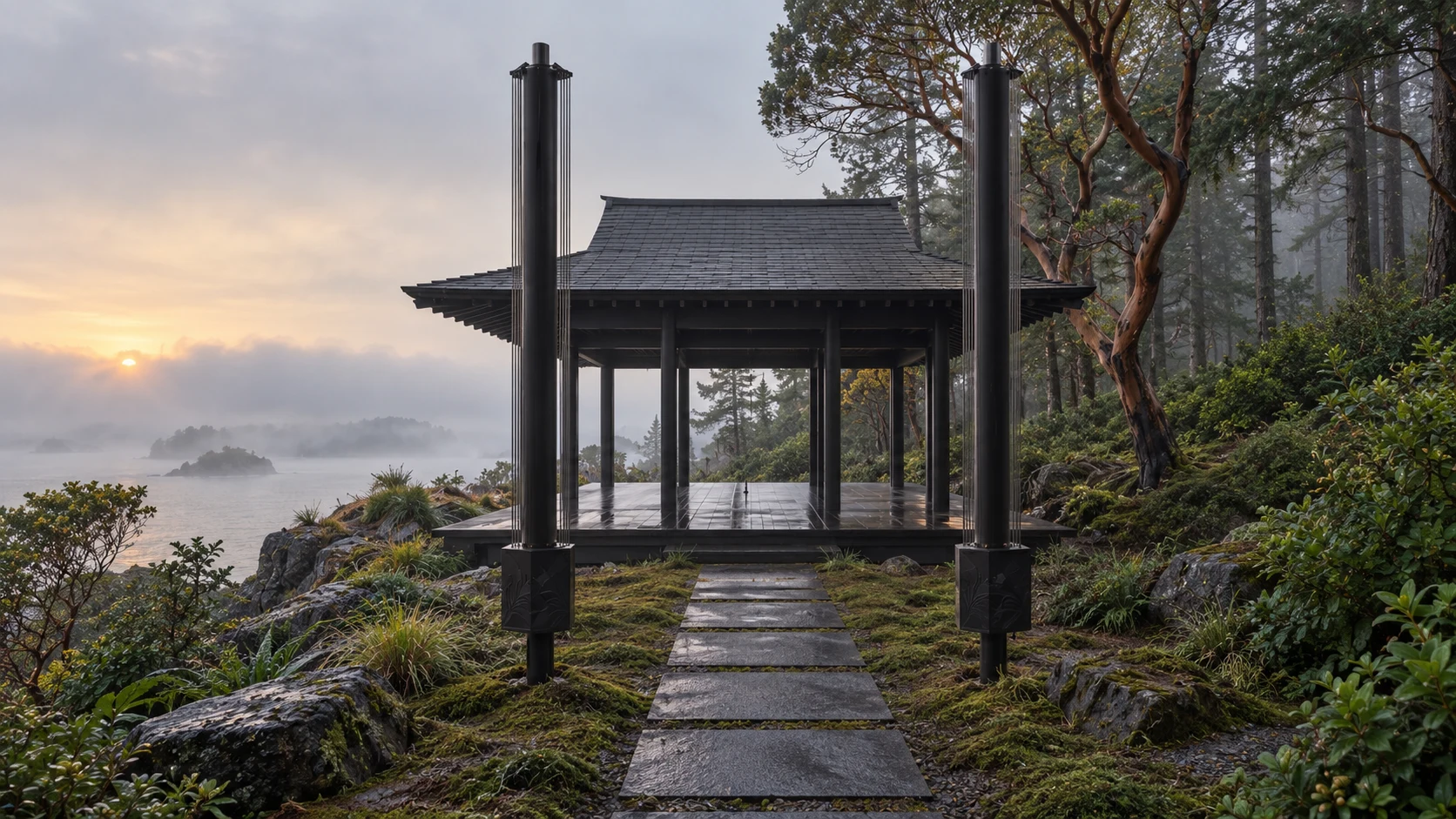
A small work may occupy a three-foot-square space within an existing path or planting, with vines growing around its structure. Elsewhere, the project may take the form of a twelve-foot pavilion: a shelter, a listening chamber, and a place where people can gather for tea or conversation.
Studies in place
Pavilion studies.
Pavilion and instrument layouts in garden and coastal settings. Placement and proportions will be developed for each site.
At the coast · an open listening fieldPavilion at dusk · coastal setting
Current design studies
Explore the instruments.
Two interactive models open in their own tabs, with room to rotate the instruments, inspect components, and explore their behaviour. These are working studies; dimensions, materials, and simulated sound remain provisional. The poles are conceived at a height of 3 m.
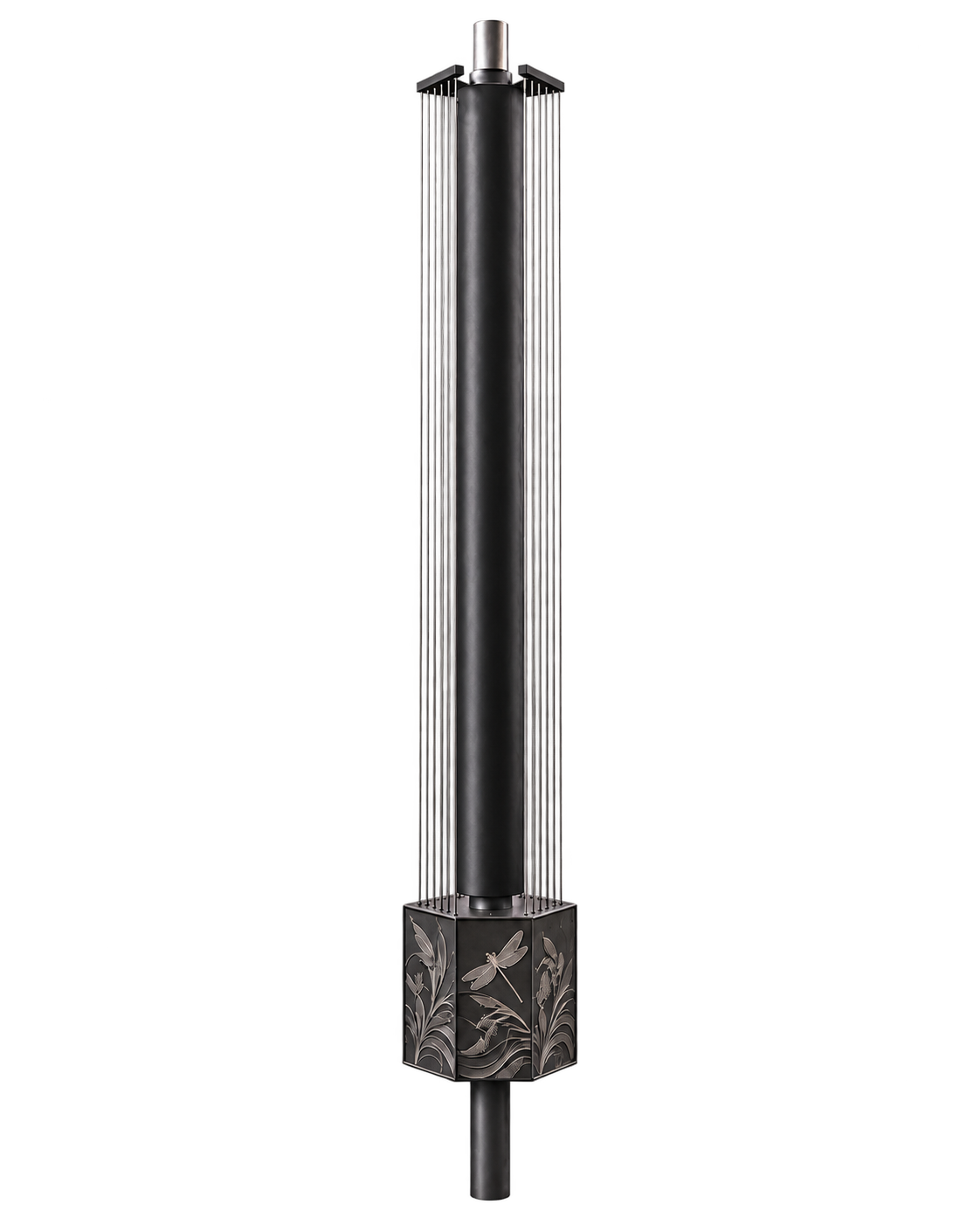
18-string aeolian harp
Wind acts directly on the strings around a formed marine-grade aluminium shell. A diaphragm and resonator carry their vibration into sound. The exterior is specified in matte black; drainage and isolated fittings address coastal exposure. Explore the cutaway, vary the wind, and enable the sound simulation.
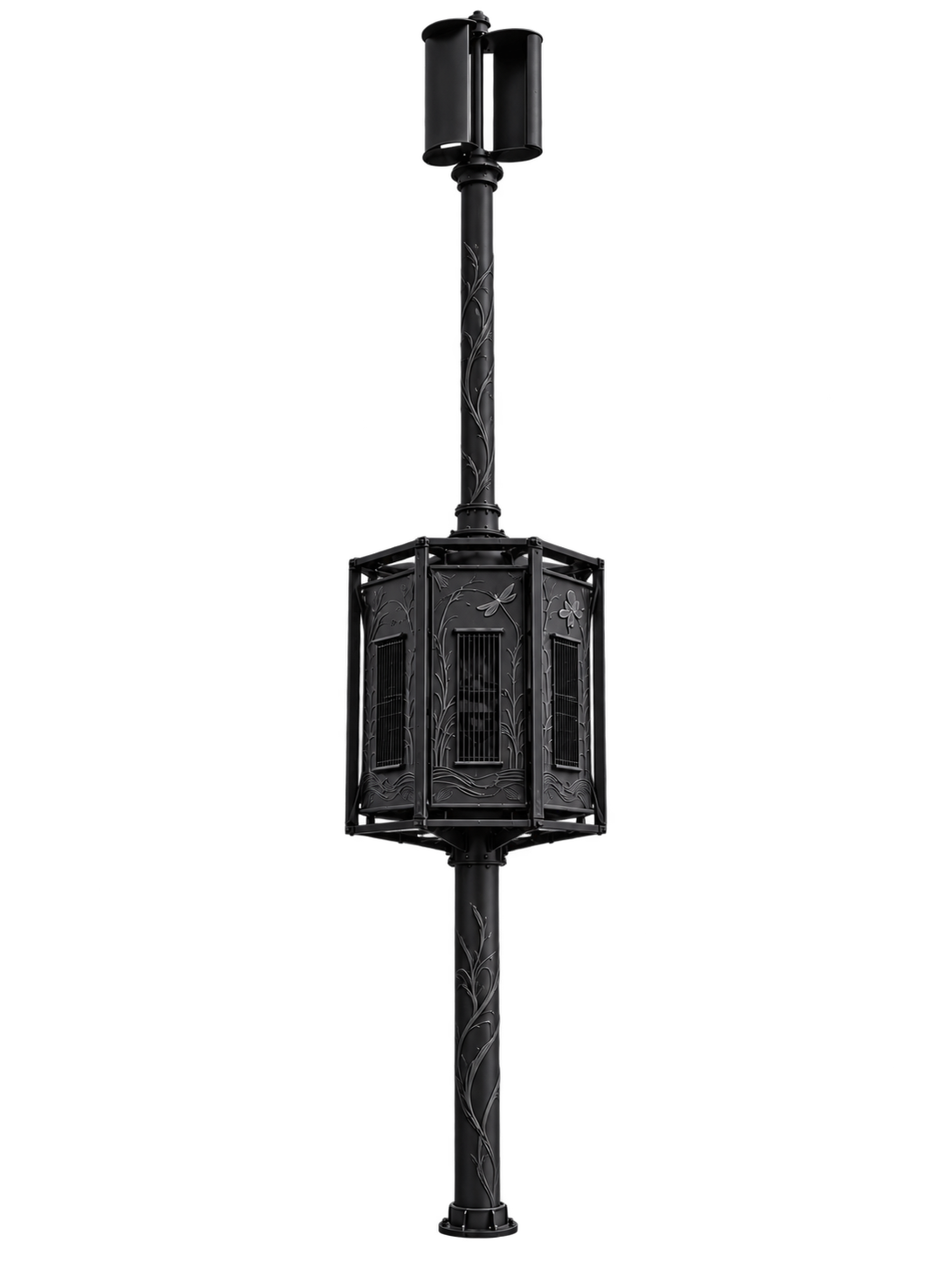
The paired instruments are designed to produce sparse, drifting, koto-like plucked tones, their different gear ratios translating the same wind into distinct rhythms that fall together and apart.
An upper rotor drives a mechanical strumming system within a matte-black, marine-grade aluminium body. Formed resonating panels, corrosion-resistant fittings, and isolated joints support its coastal use. Rotate the paired instruments and inspect the mechanism in cutaway.
Long strings, tension, spacing, material testing, and prevailing wind are explored together through sculptural and acoustic inquiry.
Research study
Aeolian flute poles
Air-column instruments are studied for aperture geometry, threshold, directionality, duration, material resonance, and appearance.
Research study
Rain instruments
Rain-guided forms investigate drop size, collection, rhythm, and resonance.
Research study
Fog-fed systems
Fog is considered as a slow local source for water-fed listening instruments, to be tested as feed for new types of audio and visual instruments and experiences.
Research study
Vessel studies
Ceramic vessel development proceeds with artist collaborators through tests of volume, glaze, cavity form, water depth, and listening response. We are also exploring recycled materials—including aluminum kegs—as a basis for ultra-low-cost versions of the suikinkutsu experience.
Research study
Materials and prototypes
Coastal exposure, fabrication methods, corrosion, access, maintenance, and sound are evaluated together before any material is fixed.